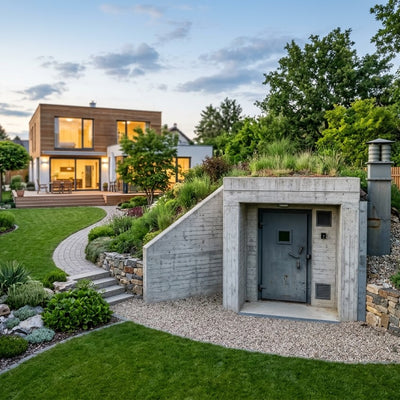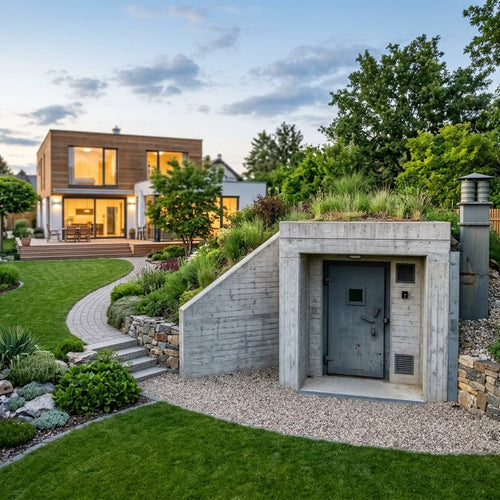

Building an underground bunker starts with the site: check the rules, groundwater, soil and flood risk before you dig. Our budgets for two to six people came to about $168,000 to $282,000 with materials and labor.
Building an underground bunker is mostly a problem of ground, water and air. The concrete is the easy part. Settle these seven things before anyone starts digging.
1. What it is for
Be honest about the threat first, because it decides the whole project. If you live in tornado country and want somewhere safe for an hour or two, you probably need an underground storm shelter, not a bunker. Those are sold as ready-made units and are far smaller and cheaper. A room for staying underground for days is a different building: it needs beds, water, a toilet, power and air for everyone inside. A storm shelter's rating also says nothing about fallout or blast. Those need a specialist's design.
2. Whether you may build it
Start with your local building department, before you buy anything. Rules differ from county to county. Zoning, easements, septic setbacks and utility lines can all decide where a buried structure can go, and you may be asked for engineered drawings. In the US, call 811 before you dig so buried lines get marked.
3. The ground
Find out what is down there. A high water table or shallow bedrock can rule out a site or change the whole budget, and clay holds water against the walls. A geotechnical report tells you what you are dealing with and tells your engineer what the walls have to carry. Check the flood maps too: FEMA says safe rooms should not be built where flood water could endanger the people inside.
4. Structure and water
Soil pushes on every wall, and the deeper you go the harder it pushes. Add the weight of the earth on the roof and anything that drives over it. That is why a buried shipping container is no shortcut: it needs reinforcement such as steel bracing or concrete encasement to take the soil pressure. Have a structural engineer design the shell. Plan waterproofing and drainage at the same time, because moisture is what ruins most of what you store down there.
5. Air
A sealed room is dangerous. People use up the oxygen and build up carbon dioxide, so you need a fresh air intake, an exhaust and a fan that keeps running when the power is out, ideally with a hand crank. A carbon dioxide monitor is cheap insurance. Keep generators and anything else that burns fuel outside and well away from the intake, because of carbon monoxide.
6. A second way out
One door can become a trap. Debris, a fallen tree or a flooded stairwell can block it, so plan a separate escape route that comes up somewhere else. FEMA also suggests giving local officials the location of a safe room's entrance, so rescuers know where to look.
7. Water, power and waste
Everything you use down there has to be stored or carried out. The usual emergency figure is one gallon of water per person per day, before any washing. Below the sewer line nothing drains by gravity, so plan a holding tank, a pump or a dry toilet. Batteries, filters, seals and stored supplies all need replacing, so budget for upkeep as well as for the build.
What it costs
The site moves the price more than anything else, so treat any number as a starting point. In November 2026 we priced one default bunker design for two, four and six people, with materials and labor. Labor is about two fifths of each total.
| People | Extreme weather | Fallout | All four threats |
|---|---|---|---|
| 2 | $168,000 | $215,000 | $221,000 |
| 4 | $191,000 | $241,000 | $248,000 |
| 6 | $220,000 | $275,000 | $282,000 |
All four threats means extreme weather, fallout, contamination and blast. The columns pay for extra materials, equipment and work. They are not protection ratings. If you want to try your own layout, you can price one in LEVA.
How these figures were made: LEVA's default bunker design priced with US reference prices on November 4, 2026, rounded to the nearest thousand. They are budgets, not quotes, and they do not replace an engineer's design or a look at your site. This article is general information, not legal, structural or safety advice. Local rules and site conditions decide what you can build.